"Good or bad, it's all playacting. If you act well, you can fool other people; if you do it badly, you can only fool yourself, and when you can't even fool yourself, you just can fool the ghosts."
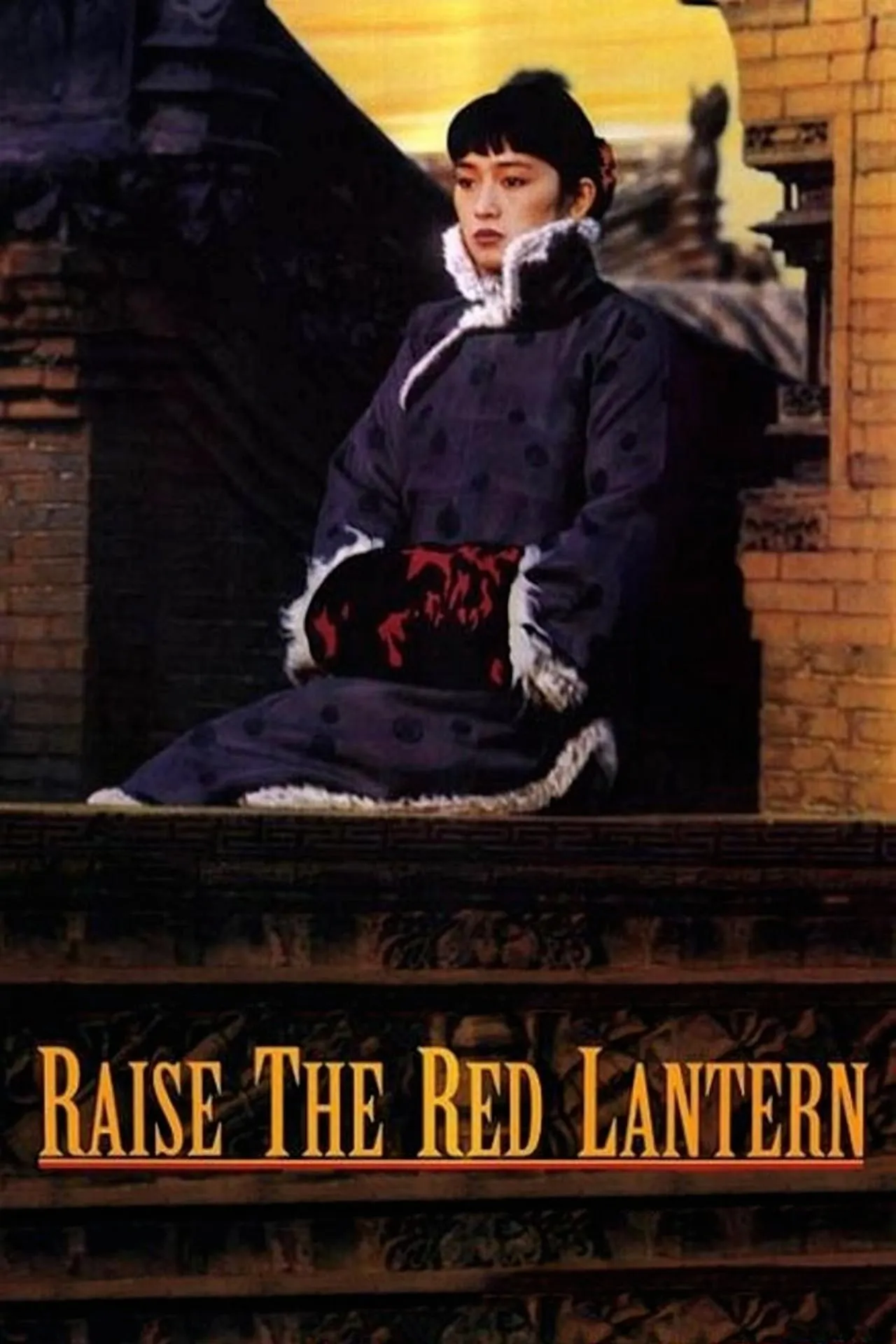
Raise the Red Lantern
Raise the Red Lantern is a study in the multi-layered psychology of oppression. The movie’s focal point is a woman named Songlian (Gong Li), a young college girl who decides to become the 4th concubine of a wealthy old man. The film opens with a conversation between Songlian and her mother - who we do not see, but whose voice is heard in the background. Songlian’s mother warns her that if she marries a rich man she will only be his concubine. Songlian responds, “Then let me be a concubine. Isn’t that a woman’s fate?”
Prior to her marriage, Songlian is largely independent. She is educated, thinks for herself, and appears to be headstrong when it comes to making decisions. Her decision to marry Master Chen comes from her analytical mind - choosing money over freedom. Ironically, once she is a part of the Chen household, her analytical mind is utilized solely for manipulative purposes - to gain power and prestige. Her education and the notion of “free will” become obsolete.
When Songlian arrives, she is introduced to the manipulative and antagonistic undercurrent that belies the patriarchal structures and rituals of the household. As soon as Yan’er, her maid, meets her, she is blatantly rude to Songlian, grabbing a water bowl away as she is washing her hands. Songlian’s response to this rejection is to make Yan’er carry her suitcase, thus initiating songlian into the game of hostility in which each character in the Chen household plays a part.
Each woman in the household develops their own unique form of self preservation. The first mistress stays mostly aloof from the power play in which the others engage. She declares at one point that she is “merely an old woman,” and doesn’t matter. She allows the others to play their games while she sits comfortably apart from the melee. The second mistress, Zhuoyun, is more conniving than the others. She be friends Songlian while secretly assisting Yan’er in creating a voodoo doll with Songlian’s name on it. The third mistress, Meishan, is a dramatic ex-opera star and her manipulative tactics reflect her past. Whenever she strikes, she does so with flamboyance, leaving a gaping wound to record her presence. She flaunts the power she has over the master, summoning him every chance she has. Songlian’s form of self-preservation is far less malicious. She manuevers to secure the greatest amount of power for
herself as possible, without directly attacking any of the other women. She tricks the master into thinking that she is pregnant so that she can gain his favor and increase her chances of a genuine pregnancy. She does eventually attack Yan’er, after she has had enough of her assaults. As with most of Zhang Yimou’s films, Raise the Red Lantern is highly sensual. The immediate surroundings of these women serves as a visual metaphor for the opressive nature of their situation. The movie takes place within the confines of a drab, angular house. The camera frames the characters in tight, enclosed spaces by capturing them through windows and doorways, lending material form to their psychological entrapment. The roof of the house is rippled, which, in combination with the sharp corners of the rectangular base, emphasises solidity and rigidity. Waves normally suggest movement, but the sharp angles of the roof tops and the obvious solidity of the material of which they consist, give the impression of trapping or confining movement, of freezing the waves and draining them of their transformational energy.
The house itself is gray and painfully drab. However, the color red appears intermittantly and allows for some moments of relief. The color red in “Raise the Red Lantern” is always linked to sensuality or vitality in some way. Whomever the master chooses to sleep with has red lanterns hung throughout their room. They also have the privilege of a methodical foot massage, which involves a red cloth that is draped over their feet. When the third mistress sings opera enthusiastically, she dons an elaborate red dress. These moments of color highlight the structure surrounding them, and make the colorless moments stand out even more. The master is never shown directly. He is always facing away from the camera or shown a t such a distance that the viewer can’t make out defining characteristics of his appearance. This dehumanizes him, making him more of a symbol than a person. We have a sense of his presence without learning anything definitive about his personality or appearance. This makes it easier for us to identify him as being representative of a larger controlling structure. He attracts the viewer’s attention to the structure of the oppressive system, rather than to the personality of the man himself.
The women in the Chen household have as much power over the master as he has over them. They yank him about with a variety of schemes designed to captivate his attention, though it isn’t him they are after, it’s the power. Meishan pretends she is sick to force the master to attend to her. He goes to her even if he doesn’t believe her claims of illness because it would look bad if she were truly sick and he ignored her. His obvious subserviance makes his stature as “master” appear ludicrous. He is as much a pawn to the structure as the women are. Noone is fully sovereign under the patriarchy.
Note: I wrote this a couple of decades ago and sadly lost the final draft. This is an earlier draft and is not complete. I plan to revisit Raise the Red Lantern someday soon - but I wanted to share what remained of the impressions of my younger self in the meantime.