"Ha! Drink our wild wine, roar at the wind, shed our blood!"
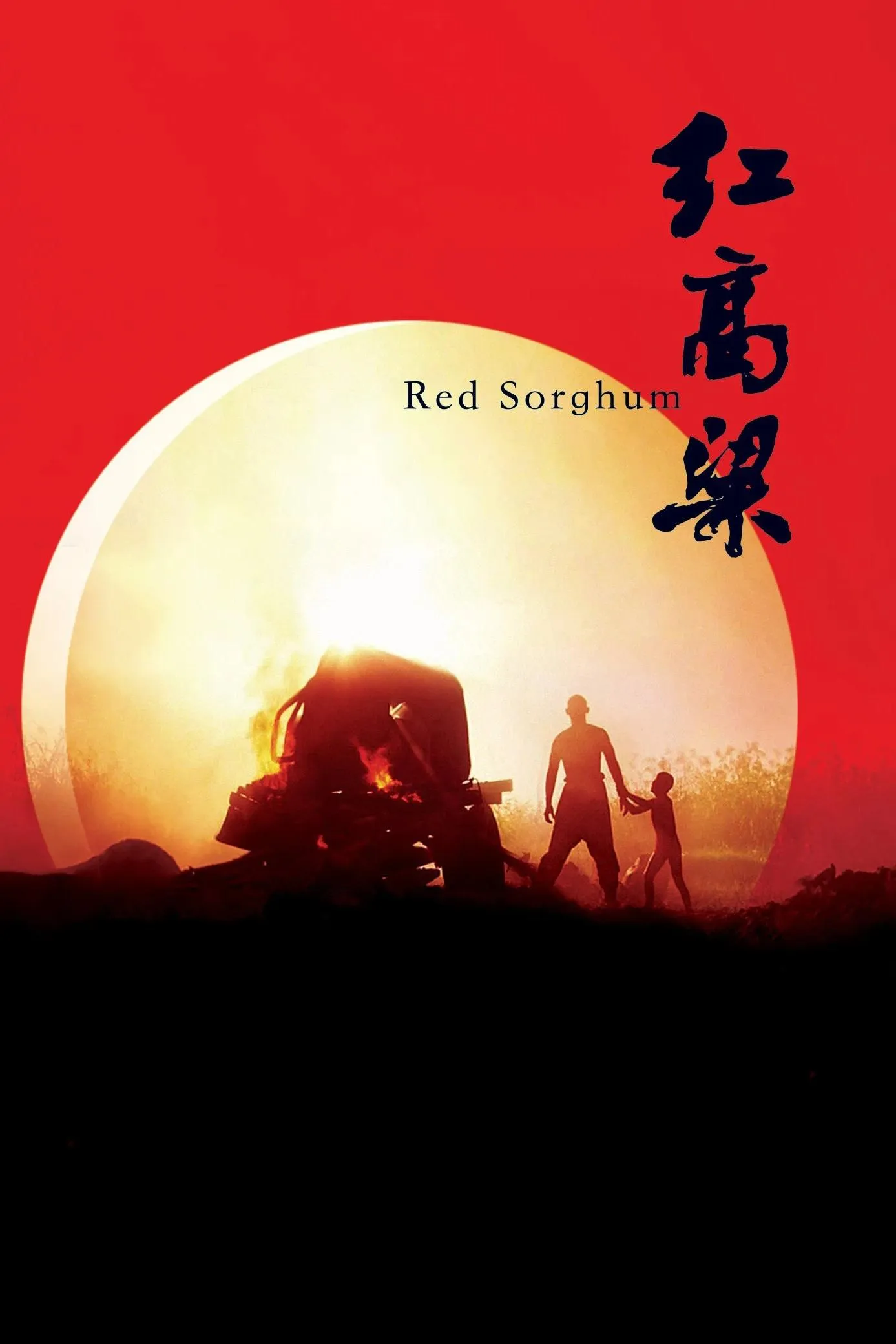
Red Sorghum
The first film that Zhang Yimou directed, Red Sorghum is a work of art that affects its viewers on many levels; operating on not only the visual/aural senses, but also on the subconscious, mythological realm common to us all.
It is difficult to lay out the plot of this film in a brief, simple synopsis because the focus is on the lives of many people, rather than on the linear progression of a romantic relationship (as usually occurs in Hollywood productions). Even though the story centers primarily on the relationship between two characters, the way in which the story is delivered brings our attention to all of the characters in the film and the fantastical, starkly beautiful world in which they live.
The basic storyline centers around a woman named Nine, and the progression of her life. She marries a leper by the name of Big Head Li, and ends up having an affair with another man. When Big Head Li ends up being mysteriously murdered, she takes over his estate - which is surrounded by sorghum fields. Later Nine gets kidnapped and held until her men are able to gather enough ransom money t o free her. Eventually the Japanese appear, forcing civilians to mow down the sorghum fields, and punishing dissidents in a gruesome way.
That’s the plot. The experience, however, is quite different. The viewer experiences the movie as an adventure rather than a mere story. She feels a part of the characters’ lives, as if she is living the drama on the screen, not just watching it. The plot is difficult to explain because the moments that impact the viewer the most are mundane events that are visually/aurally vivid. One jubilant scene involves Nine and her men celebrating their newly made wine. They drink to excess, splashing wine carelessly about and singing loudly. To simplify this moment in a description of the plot (i.e. “They made wine and celebrated”) would detract from its actual impact and level of importance in the film. Red Sorghum is a cry to the subconscious to awaken and release the parts of ourselves that we deny. It is a clumsy, salacious, almost festive mythology which takes place in a simplified, mundane setting and feeds the part of us that craves life in the midst of our daily activities. This movie smothers its viewers in the thick syrup of explosive sensuality and leaves them gurgling happily, drowning in a sugary substance that is blood, wine, and urine all at once.
This movie could be interpreted as a protest of repressive, mythological traditions. By visually assaulting the viewer with a barrage of powerful images, it breaks from the normal style of Chinese mythology, which stresses the rewards of propriety and restraint. Most mythologies reflect the cultural values of the society from which they spring. The Chinese value restraint, propriety, and humility, but an obsessive focus on these values often translates to repression or rigidity. Red Sorghum challenges this repression by lathering itself in a thick film of color and intense imagery.
However, even though this movie breaks from traditions, it adheres firmly to others. Red Sorghum resonates with classical mythological elements. It draws on countless traditional storytelling techniques, and transforms them by fully utilizing the added resources that are unique to the medium of film.
In the tradition of storytelling, rhythm and song often come into play. A storyteller will often use the repetition of certain words or sounds in combination with a rhythm and/or tune to maintain the audience’s attention. Red Sorghum follows that tradition, with songs interspersed throughout the film that have repetitive, rhythmic appeal. They are often sung in conjunction with the most dramatic visual effects or emotional events in the story. For instance, one of the most striking scenes is near the very beginning, when Nine (Gong Li) is carried in a red wedding sedan to Big Head Li’s. The red sedan against the orange-yellow expanse of the desert emanates vitality. The scene is emotionally charged when the sedan carriers start singing and jolting the sedan, taunting Nine about her marriage to a leper. We witness an outpouring of emotion as Nine clutches a pair of scissors to her breast, crying. The sedan carriers sing and dance expressively until they hear her quiet sobs - at which point they cease immediately.
Although there has always been a visual element in the tradition of storytelling, t h e visual versatility of film opens new avenues of expression, which Zhang Yimou fully employs. Red Sorghum’s visual effects are literally stunning. The viewer gets pulled into the film by their eyeballs ( and their ears), as the color red moves through it in abundance. The red of the film - which is blood, sunlight, wine, and fabric at varying points throughout - adds a visceral energy to its beauty. The image of the sorghum bowing and rising in the wind permeates the movie, giving it a rhythmic, powerful, flowing energy. In this way, the visual elements mirror the auditory elements and assist them in transforming the tale from a stylistically traditional mythology to a new form, a new mythology.
The image and sound of the sorghum work synergistically to create a feeling of other-worldliness. The sound of the wind in the sorghum resembles the sound of the sea, it drowns out all other sounds, creating an eerie ambiance. The visual aspect of the tall green stalks of sorghum moving in the wind also resembles the sea. The sea of sorghum creates a background which envelopes all that moves through it, lending a sense of macrocosmic permanence surrounding microcosmic events. The movie ends in a morbid celebration of red. I use the word “celebration” only to describe the exuberance with which the color is splashed about, which suggests a sort of gaiety even though the events themselves are horrific.
The end of this film is so laden with red, that it is almost as if the film cells are an artist’s canvas and Zhang Yimou is enthusiastically throwing buckets of ochre-colored paint across its surface.
Note: I wrote this many decades ago, and the final draft was sadly destroyed. This is an earlier draft that survived. I plan to revisit Red Sorghum from a more mature perspective (and with a deeper cultural perspective) eventually, but I like how this review reflects the raw somatic experience that I had when I first encountered it.